

Special edition: AUKUS (2 of 3)

Today’s special edition: |
Good morning Intriguer. Just two more days in the perineum of the year!
Now, I believe in keeping the vibes high this time of year, so let's wave goodbye to 2025 with a few of my favourite things:
Best comeback story: The green sea turtle is off the endangered list for the first time since the 1980s. Fantastic news unless you’re kelp.
Most predictable headline: French President Emmanuel Macron tried his hand at ping pong during his diplomatic trip to Sichuan in December. Tabloid editors smiled and took the rest of the day off.
News we were most happy to be wrong about: The nationality of the new pope. We loudly proclaimed we'd buy you all a drink if the cardinals elected an American, which led to us co-hosting a party with the Czech ambassador to the UN, who took pity on us for being so spectacularly wrong.
Now, your turn — give us your ‘best ofs’ by hitting reply. While you ponder your list, we’re delighted to present to you the second part of our AUKUS special series.
Happy New Year!

Number of the day
44%
That’s how far US purchases of fine wine have fallen under Trump's 15% tariff. It’s not just the tariffs to blame as the market has fallen three years in a row, with Bordeaux down 6.6%. Prices are now back to 2020 levels, thereby fully justifying your indulgent consumption of claret over the holiday period.
Do you really need those subs?
Welcome to part two of our special briefing on the Australia-UK-US defence tech pact known as AUKUS (you can read part one here!).
Where were we? Ahh yes… submarines.
The last time Australia faced an existential threat (during World War II), Imperial Japan expanded across Southeast Asia’s island chains in an attempt to control the Western Pacific and key sea lanes, while isolating Australia from the US and UK navies.
Australia now fears the same from an expansionist China, which is why the Aussies have hustled to preserve their maritime security: subs can help you lurk near and control key flashpoints and chokepoints, forcing foes to think twice and spread themselves thin.
So Australia initially turned to France for new diesel subs in 2016, but spectacularly dumped the French for proposed AUKUS nuclear-propelled (not armed) subs in 2021.
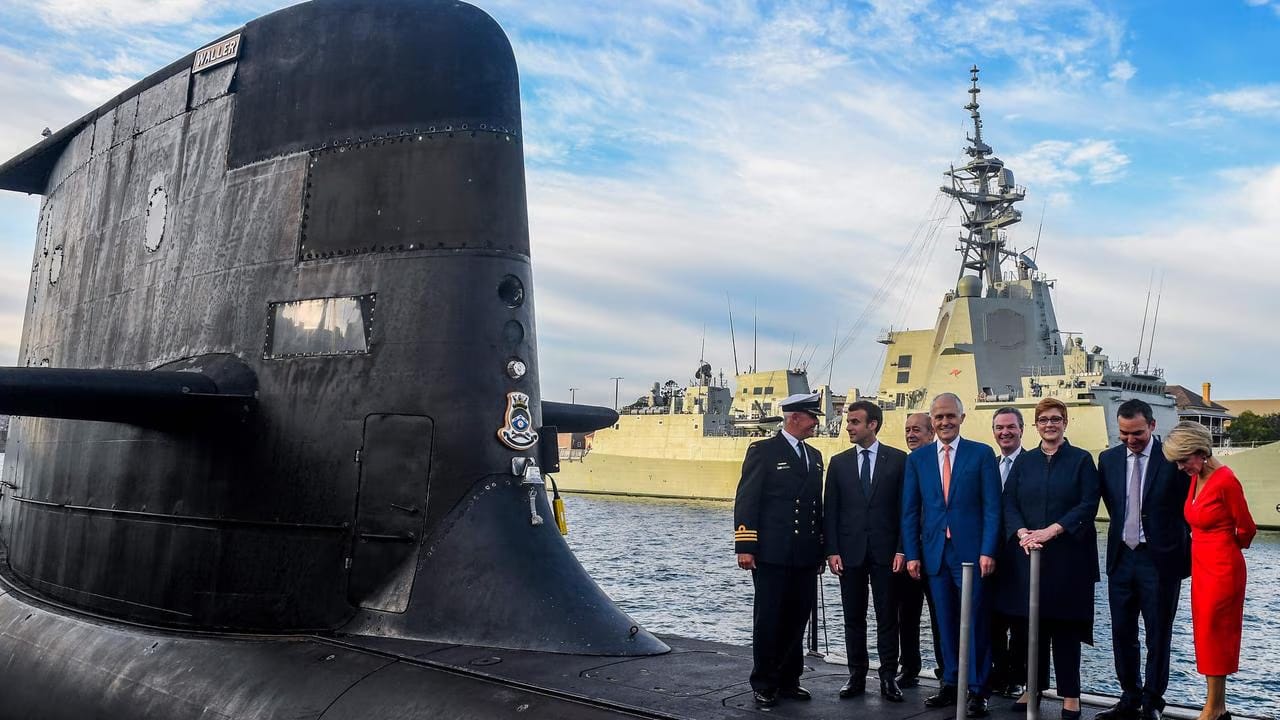
Macron (2nd from left) visited Australia in 2018 to reaffirm the subs deal after a rocky start
Why?
Diesel subs are noisier, slower, need more refuelling, and have shorter range, all making them easier to track, and therefore less of a threat compared to…
Nuclear subs, which can go further, longer, and quieter – you never really know where they are, meaning they create a 24/7 at-sea deterrent.
And while the French also have formidable nuclear subs, the more secretive US tech is unrivalled, which is why the US only ever shared it with the Brits to help counter the Soviets. Now 70 years later, they’re sharing it with the Aussies to help counter China.
But of course, developing futuristic floating death orbs powered by magic rocks is a massive undertaking raising all kinds of questions, like is AUKUS…
Feasible? Massive defence projects are rarely on-time or on-budget
Attainable? The US needs to pump out ~2.33 subs per year to meet its own needs plus these new AUKUS pledges, but it’s barely at ~1.2 per year right now
Affordable? We’re talking $250B or beyond
Enough? By the time Australia maybe starts getting 3-5 subs from the US (2030s) and then theoretically its own AUKUS subs (2040s), China will have 50-90 new subs
Too much? The initial announcement rattled some of Australia’s neighbours
Sovereign? Some Down Under fear adopting US tech binds Australia to DC
Wise? Australia is arguably throwing its lot in with the US, just as the region’s doubts about US power grow louder
Dependable? Trump’s views on alliances keep evolving, though this pact has now survived a Trump 2.0 review and he’s told Australia’s PM it’s all systems go.
Arguably the biggest question could end up being… might these subs soon be obsolete?
On the counter-sub front, China is already developing tech (like quantum and magnetic sensing) that could potentially detect ultra-faint submarine wake patterns, whether via a network of underwater drones and sensors, or theoretically even via satellites above.
And relatedly on the sub front, when your ultra-pricey kit is more likely to be detected and destroyed, this maybe shifts things back in favour of developing smaller, cheaper, and more plentiful arms platforms: eg, Japan is already developing lithium-ion battery subs that could rival nuclear performance, but without the weight, cost, or nuclear headaches.
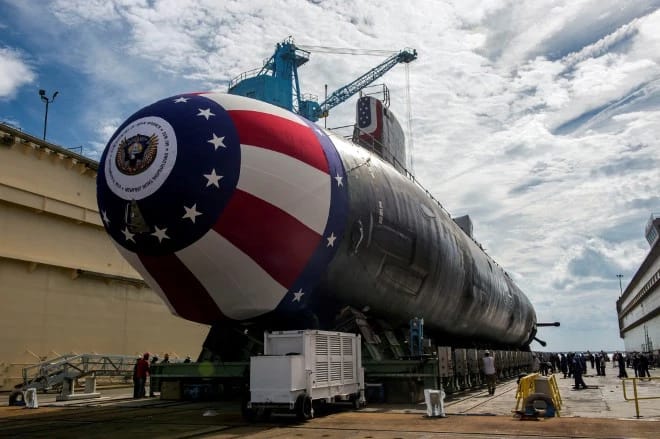
In a first, the US will sell Virginia-class subs to Australia while the AUKUS trio develop their new sub
Anyway, given the massive stakes and hurdles, work is already happening:
Australia has pledged ~US$12B in infrastructure upgrades over the first decade so it can start hosting rotational US and UK nuclear subs from 2027 as an initial stopgap. It’s also invested another $2B (with another billion to come) to help expand US sub production so the US can sell the Aussies state-of-the-art Virginia-class subs as the next stopgap (those later new AUKUS subs will take a while).
The United States is also investing $12B in reviving its own submarine industrial base across the current five-year defense budget period (potentially helped by South Korea now moving to build its own nuclear subs in the US too).
And the United Kingdom is investing $5B in its own nuclear industrial base to ensure it can deliver those eventual “Built in UK, sent to Australia” AUKUS subs — Rolls-Royce is expanding its Derby UK factory site to (for example) build Australia’s nuclear reactors, while BAE is down for the main structural components.
“Developing futuristic floating death orbs powered by magic rocks is a massive undertaking”
So there’s lots happening already, but it’s a massive journey ahead.
And believe it or not, that’s only half the AUKUS strategy.
Maybe we’ll get around to briefing you on the other half next year? (hah okay dad joke, the final instalment will hit your inbox this Friday, January the 2nd)
Sound even smarter:
Nuclear subs can remain submerged indefinitely, limited only by food supplies. They can also get to/from Asia’s maritime chokepoints much more quickly, meaning they can loiter there up to ~seven times longer than a conventional sub.
Meanwhile, elsewhere…
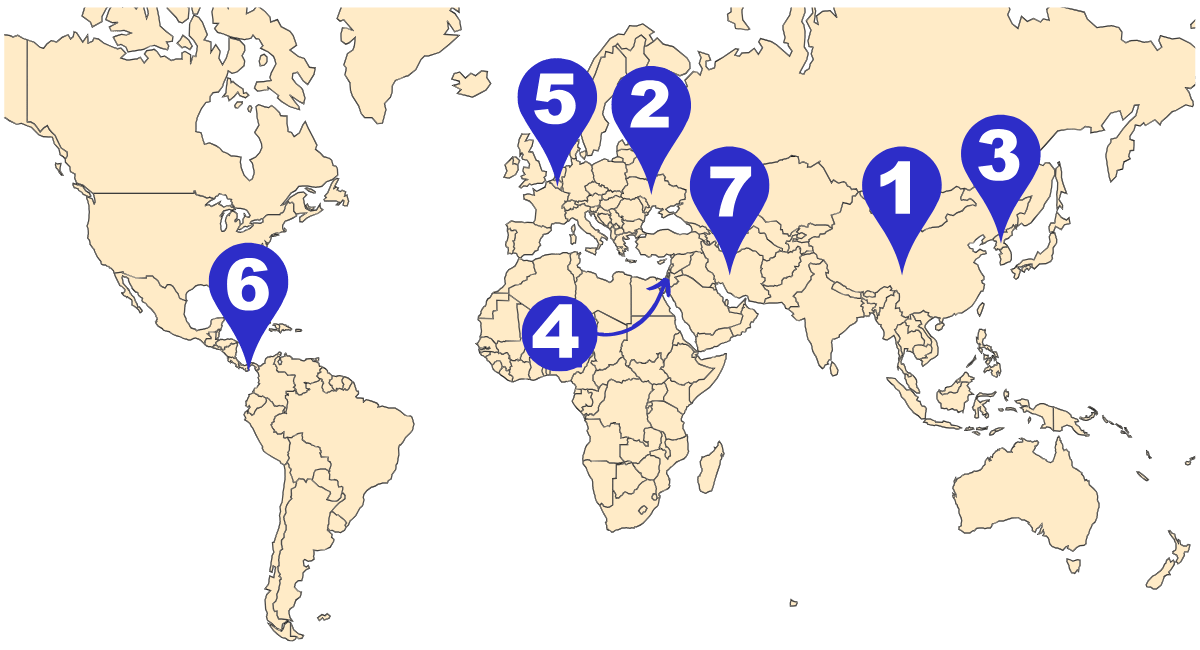
 | 🇨🇳 CHINA — Drills, baby drills. Comment: While Beijing has linked these drills to (ie blamed them on) the pre-Christmas US defence package for Taiwan, there are a couple of other timeframes Xi likely had in mind: first, between Christmas and the New Year, Western capitals are now in hibernation or focused on Ukraine — so it’s an ideal time to ratchet up pressure while minimising any blowback. And second, Trump wants wins out of his planned trip to China in April, so to the extent he responds publicly to these drills, it’ll be with one eye on keeping things steady with Beijing. |
 | 🇺🇦 UKRAINE — Almost there? Comment: As for whether Putin will agree? His whole approach reminds us of the old Soviet quip that they were committed to negotiations (and would stretch them out until Doomsday). And right on time, the Kremlin now appears to have made false claims of an attack on a Putin residence — nearby residents have told local outlets they didn’t hear a thing, so the claim looks like an attempt to a) undermine Zelensky’s US talks, b) justify Russian attacks on Ukraine’s leadership, or c) probably both. |
 | 🇰🇵 NORTH KOREA — Boom. Comment: Kim’s democratic rival in the South (Lee) rose to power promising more outreach to the North — in return, he’s now received periodic insults and flexes. Meanwhile, there are intriguing rumours the Russian arms ship which mysteriously sank off Spain last year might’ve been carrying nuclear reactors for Kim’s subs! Sabotaging such a shipment would be an easy (if risky) way to delay Kim’s progress. |
 | 🇮🇱 ISRAEL — Friends and neighbours. Comment: You barely need to squint to see what’s right there between the lines: these three neighbours all share a common rival in Turkey. Officials out of Ankara are publicly downplaying the news, but some in the Turkish media are already portraying the opposing trio as an “alliance of evil”. |
 | 🇪🇺 EUROPEAN UNION — Not cool. Comment: Why would Israel recognise Somaliland? The coastal strip has a strategic location (on the Gulf of Aden), and offers Israel a way to counter Turkey’s growing influence over broader Somalia. It’s also classic Israeli periphery doctrine: back fellow minorities in a hostile region to distract and divide the dominant. Meanwhile, just over the Gulf, Saudi jets have hit targets in Yemen’s port of Mukalla — it looks like a response to the lightning expansion by Emirati-backed forces earlier this month. |
 | 🇵🇦 PANAMA — Monumental drama. Comment: Ordinarily you might handle this kind of provincial snafu via back-channels, but that gets trickier amid a broader tug-of-war over the Canal — the proposed sale of Canal ports to a US-led consortium seems to have hit a big snag, with Beijing threatening to block the sale unless its own state-owned COSCO shipping giant gets a majority stake. |
 | 🇮🇷 IRAN — To the streets. Comment: It’s been a rough year for the mullahs, who’ve watched as the Israelis dismantled their proxy network, the Americans hit their nuclear sites, tighter sanctions hit their coffers, and a drought even hit their urban water supplies. Tehran has hustled for answers (like deleting zeros from its beleaguered currency), but the reality is Iran’s economy won’t stabilise until its regime normalises. |