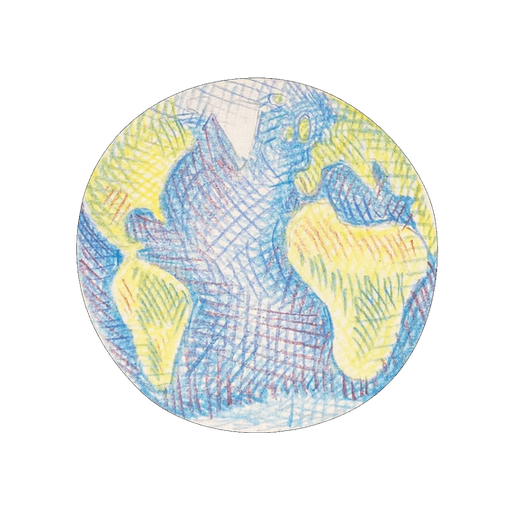

Is oil’s centre of gravity shifting?

With oil prices now at their highest since 2022, it might be hard to shift your gaze to the Caribbean, but it’s now home to two brewing storms that are worth your attention:
First, there’s the regional uproar after Venezuela’s Delcy Rodríguez pointedly wore a pin while in Barbados, asserting Venezuela’s claims over Guyana’s oil-rich Essequibo region.
And second, the International Court of Justice (ICJ) actually kicks off its public hearings for that big Venezuela v Guyana court case this Monday (aka Star Wars day, May the 4th).
It’s a fascinating case around an 1899 case between two entities that no longer even exist (Colony of British Guiana, United States of Venezuela), but the reason we bring both oil-linked headlines to your attention is to ask: is oil’s centre of gravity shifting west?
There are four main reasons to suspect yes, starting with…
First, there’s no OPEC-style cartel in the Americas — rather, it’s a decentralised group of price-driven oil-producers like the US, Guyana, Brazil and Argentina, who can each freely pump as much oil as their prices and pipes permit. Amid rising oil prices, that’s why these sanction-free players have emerged as one of the Iran war’s main beneficiaries.
Second, there’s a prodigal son returning (even if by force), as a conga-line of US oil executives shuffles through Venezuela to crunch the ROI on how much investment is really needed to finally unleash the world’s largest oil and gas reserves. Speaking of which…
Third, there’s massive new supply coming online, whether you look at Guyana’s offshore Stabroek (targeting 1.2mbpd by 2027), Brazil’s pre-salt fields (growing another 200kmbpd this year), or Argentina’s Vaca Muerta (targetting 1mbpd this year and climbing).
And fourth… there’s the raw geographic and political edge — these oil-producers can reach the world’s three largest buyers (Asia, USA, Europe) either directly across the Atlantic and Pacific, or (worst case) via the Panama Canal. No Hormuz or theocrats, and we’re mostly talking about relative stability, security, and the rule-of-law.
Sounds solid, right? The region already accounts for ~30% of the world’s oil output (up from its mid-2010s low), and is now delivering much of the reliable global supply growth.
But wait ‘till you see the ‘no’ case, starting with…
First, the Middle East still dominates on sheer cost and scale, with decades of investment, optimisation, and sheer market inertia driving costs as low as $3 per barrel in Saudi Arabia — that’s up to a tenth what Guyana faces.
Second, there’s the related fact this region still holds ~90% of the world’s usable spare oil capacity (pre-blockade!), so it’s uniquely placed to both ramp-up output and outlast anyone higher up the cost curve. And…
Third, there’s sheer volume — the MENA region still controls ~half the world’s proven reserves, and somehow keeps finding more, with Saudi Arabia, Iraq, Kuwait, Oman, Libya, and others all announcing new finds in the last year alone (mostly still marginal / early).
So we’re not talking about some sudden takeover, but the shift is real, particularly while so much of the Gulf’s output is still trapped behind Hormuz.
That’s why May the 4th just got a lot more interesting.
Members-only analysis
Intrigue’s Take
Get full access to Jeremy, John and Helen’s unvarnished takes on the world and what it means for you.