

Special edition: AUKUS (3 of 3)
Now that we’ve briefed you on the bigger picture strategy behind the Australia-UK-US AUKUS pact, and its most eye-catching deliverable (nuclear-powered subs for Australia), it’s time to wrap this special series with a look at the other half of AUKUS, sexily called Pillar II 🔥🔥🔥.
Focusing on other advanced defence tech, it’s about pooling everyone’s resources and strengths to maximise interoperability and counter China’s massive leaps forward.
And to do so, this second pillar leans less on the big government-led programs needed for nuclear subs, and more on investing billions across commercial R&D.
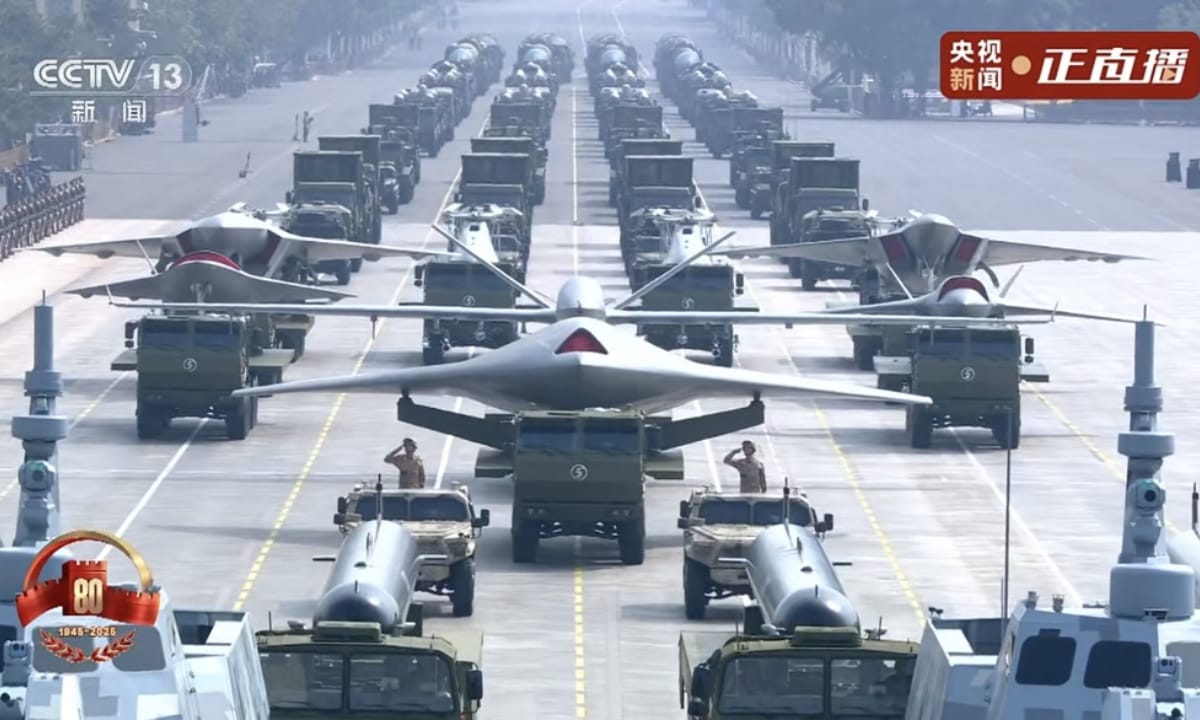
China debuted several new drones in September. Pic from CCTV.
But where’s all that cash coming from? Government defence innovation units still provide seed funding and run innovation challenges to identify, test, and de-risk new ideas, but the idea is to then crowd-in private investors (rather than stretched government budgets) to ramp it all up.
And one way they’re seeking to lure that sweet sweet private cash is via a new AUKUS Defense Investors Network consisting of ~400 venture capital and family office outfits from across the US, UK, and Australia, collectively managing up to $400B.
With AUKUS swallowing a bigger chunk of the trio’s defence spending, the idea is to have a pool of clean, trusted capital (ie without adversarial influence) that’s comfortable around — and educated on — defence, then looped into the investment opportunities early.
But where do these three allies want all this cash to go?
Australia, the UK, and the US have identified eight priorities, including…
Cyber, with an emphasis on protecting critical infrastructure
AI and autonomy, to accelerate safe adoption of drone systems and beyond
Quantum, with potential uses across navigation, tracking, and encryption
Undersea, particularly robotic and drone systems
Hypersonics, which can overwhelm foes by travelling at five times the speed of sound (China has them already, while Russia and North Korea both claim them)
Electronic warfare, which is about dominating the electromagnetic spectrum (we’ve seen this kind of jamming and tracking in the Russo-Ukraine war)
Integration, which focuses on plugging more startups into defence — and getting their tech from the lab out to the frontlines — asap, and
Information sharing, which focuses on streamlining secure data exchange and export controls (like America’s strict ‘ITAR’ rules) so everyone can work together.
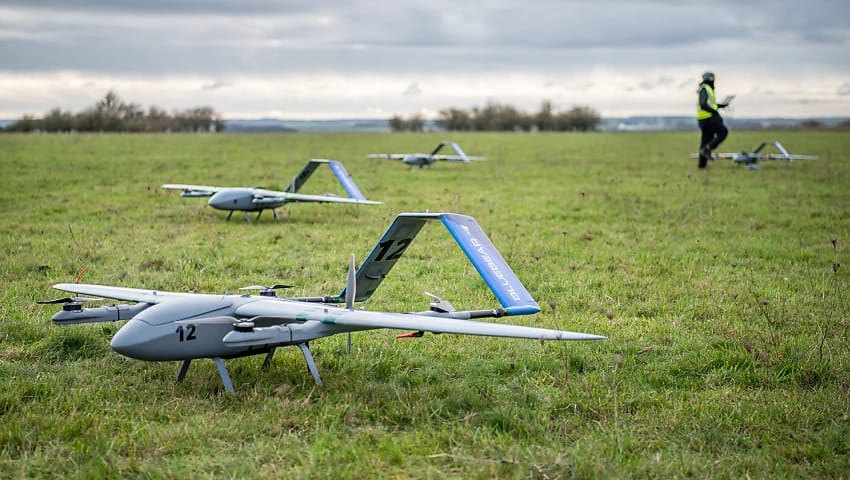
The UK hosted the first AUKUS AI and autonomy trials in 2023. Pic from the UK’s MoD.
Of course, that emphasis on new tech is creating opportunities for newer players, the most famous of which is probably California-based Anduril (turns out having a mullet-clad, Hawaiian shirt-draped childhood-genius co-founder is good PR). It’s already delivered the underwater ‘Ghost Shark’ drone to Australia’s navy, and is developing fighter jet ‘wingmen’ drones for the US military.
All that to say… this AUKUS Pillar II ramp-up means investment opportunities won’t just be limited to the usual defence primes that Wall St analysts traditionally obsess over, like Lockheed or Raytheon, but a vast array of smaller, more specialised players.
And interestingly, this investment spree might not just be limited to the original Australia, UK and US trio, either: other partners like Canada, New Zealand, Japan, and South Korea have been floating their interest in joining this pillar (not the subs one) too.
“Turns out having a mullet-clad, Hawaiian shirt-draped childhood-genius co-founder is good PR”
But while there’s plenty of enthusiasm plus the obligatory defence sector TLAs (three-letter acronyms), this pillar faces its own headwinds: broad priorities, vague funding, bureaucratic delays, lingering export controls, IP spats, and beyond.
Anyway, Pillar II is basically seeking a free-world answer to China’s civil-military fusion: ie, copying the outcome (rapid flow of capital and tech into military modernisation), but getting there with incentives and competition rather than state coercion.
And whereas those Pillar One subs will take decades, some of this Pillar II tech is already coming online. Only history will tell whether that’s enough.